
Germany’s New Law Could Let Authorities Raid Google, Meta and X Offices — Even Without a Judge
Ein Beitrag von
The federal government is planning a new law that would allow searches of tech giants and journalistic newsrooms, as well as the seizure of materials—partly without a judicial warrant. The draft bill adopted by the cabinet on December 17 is being described by experts speaking to NIUS as an unconstitutional assault on fundamental rights and a targeted attack on freedom of expression.
If the law is passed by the federal government, it could have immediate consequences for the premises of U.S. tech companies in Germany. They would face the threat of searches and seizures of documents if they fail to transmit information exactly in line with EU rules. Germany is thus further expanding its censorship complex, while the United States under President Donald Trump has only just imposed an entry ban on the heads of the organization HateAid, thereby taking aim at a central actor in the German censorship complex.
At the heart of the matter is the so-called Political Advertising Transparency Act, or PWTG, originating from the office of Digital Minister Karsten Wildberger. With this law, the federal government intends to transpose an EU regulation into national law that governs how political advertising may be disseminated online.
A central role in the new legislation is assigned to the Federal Network Agency, which has already risen to the status of a censorship authority through the Digital Services Act (DSA) and is headed by Green Party politician Klaus Müller, the former environment minister of Schleswig-Holstein and a close confidant of former Vice Chancellor Robert Habeck (Greens). Under the planned law, the Federal Network Agency—alongside the Federal Commissioner for Data Protection—is to receive far-reaching powers that are otherwise primarily reserved for criminal law enforcement agencies.
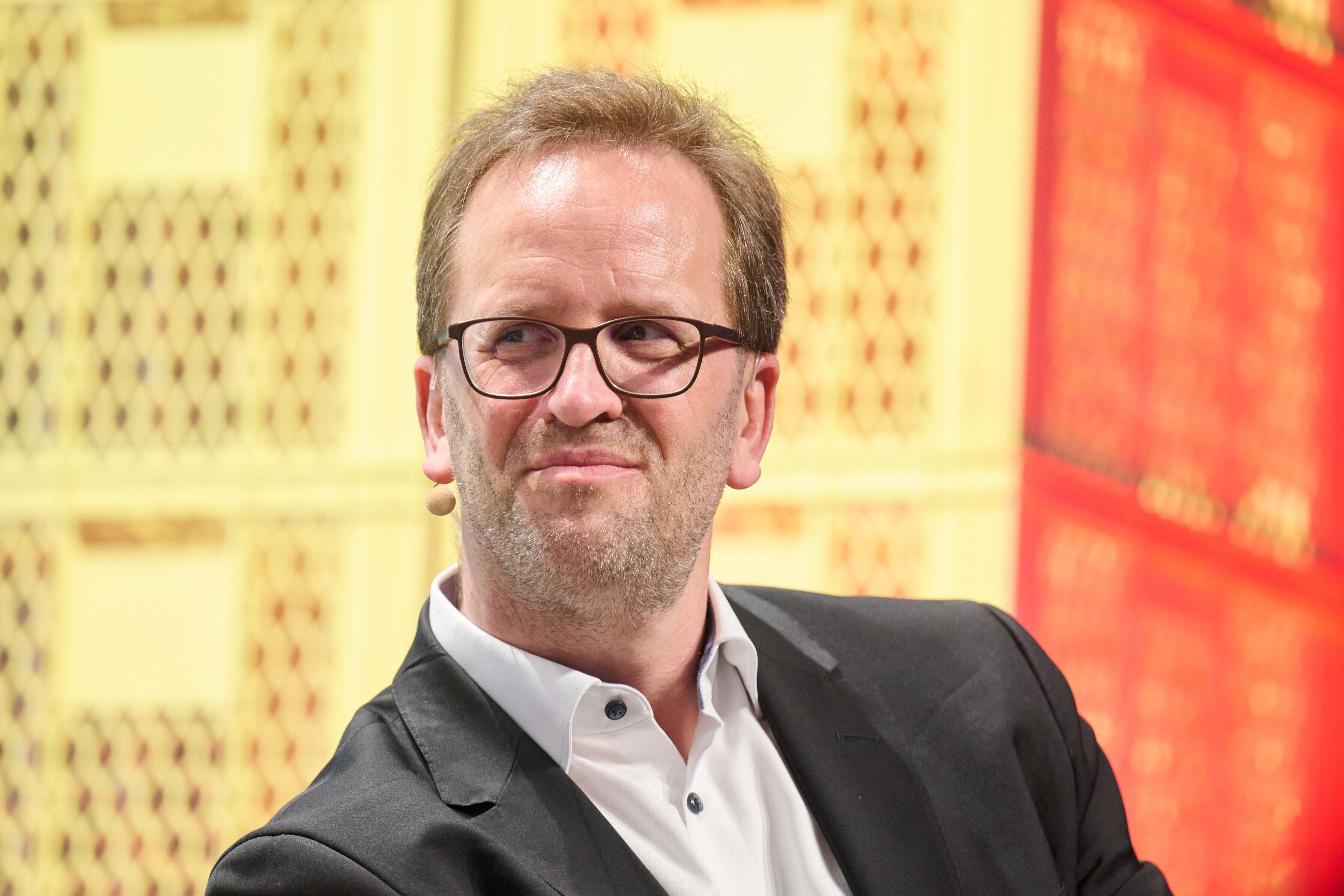
Klaus Müller heads the Federal Network Agency.
The backdrop is the EU regulation TTPA (“Transparency and Targeting of Political Advertising”), which critics see as a new EU tool for censoring media outlets and political parties critical of the government. The regulation claims to promote greater transparency in political advertising, but in reality the rules are so convoluted and the data-protection requirements so extensive that major tech companies such as Meta and Google have decided to stop running political advertising altogether. The EU’s threat is severe: tech corporations could be forced to pay up to 6 percent of their annual revenue if the EU determines they have violated its rules.
This is a problem not only because political advertising is a vital part of democratic opinion-forming. The vague definition of “political advertising” also creates a chilling censorship effect, as major platforms filter content using keywords and repeatedly misclassify journalistic material as advertising—then block its promotion. NIUS, for example, is regularly denied the promotion of journalistic content on YouTube due to alleged election advertising, including videos such as “The EU Wants to Ban Germany from Building Gas Power Plants” or “Exposed: The Secret Salaries of ARD Executives.”
Searches – Even Without a Judge
The EU’s TTPA therefore massively restricts free opinion-forming. The federal government is now going even further than the Brussels regulation with its own draft law.
The legislation allows the federal government to carry out searches at providers of political advertising, such as online platforms but also media companies. If these entities fail to present the required documentation, their premises may be searched on the order of the Federal Network Agency. In certain cases, this can even happen without a court order: “In cases of imminent danger, the persons carrying out the inspection on the order of the competent supervisory authority may, during business hours, carry out the necessary searches without judicial authorization.” The government’s law states explicitly: “The fundamental right to the inviolability of the home (Article 13, paragraph 1 of the Basic Law) is restricted to this extent.”
As a rule, such intrusions into fundamental rights must be appropriate and proportionate—something that is highly questionable in this case. Constitutional law scholar Volker Boehme-Neßler told NIUS: “House searches are one of the sharpest swords available to investigative authorities; the state can hardly interfere more severely with fundamental rights. According to the draft law, however, searches are not to be carried out by investigative authorities but on behalf of the Federal Network Agency or the Data Protection Commissioner. I consider this a completely disproportionate expansion of state investigative powers. After all, this concerns the extremely important fundamental right to the inviolability of the home.”
The law also affects other fundamental rights, such as the democratic principle and party freedom. Boehme-Neßler criticizes: “When the state begins to monitor, examine, and evaluate political communication, free democratic discourse and free competition between political parties are restricted.”
Lawyer Joachim Steinhöfel also warns: “When exactly is there supposed to be ‘imminent danger’ at a platform that would justify a search without a judicial warrant? Bureaucrats issue an order, judges are sidelined, fundamental rights become bargaining chips of power interests.”
Tool for Intimidation
If platforms such as Google, Meta, or X fail, in the view of the Federal Network Agency, to provide sufficient information on certain advertisements, the companies’ offices in Germany could be searched by inspectors commissioned by the agency. That this is no empty threat is demonstrated by the EU’s actions against the politically unwanted platform X. Since U.S. entrepreneur and Trump supporter Elon Musk acquired the platform and ended years of political censorship there, X has been in the EU’s crosshairs and was only recently hit with a 120-million-euro fine on what critics call flimsy grounds.
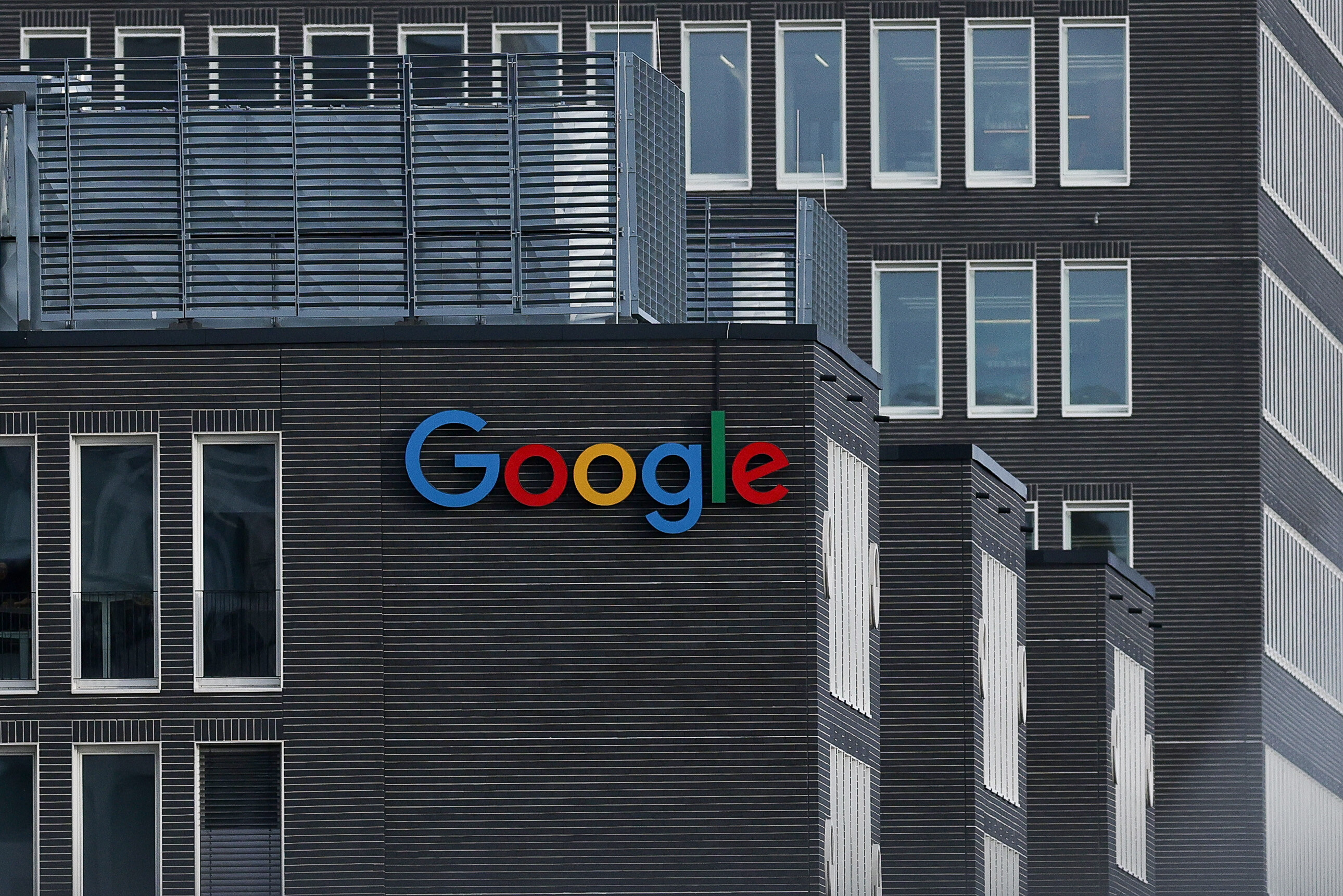
A Google building in Munich. Companies such as Google could soon come under even greater scrutiny from the Federal Network Agency.
Steinhöfel places the lawmakers’ actions in a broader context: “The EU and the federal government are thereby interfering with Article 5—freedom of expression. Because the regulation makes political advertising de facto impossible. The fines are so high, the rules so unclear, the bureaucratic burden so enormous that even major tech giants no longer allow the promotion of political content. Political and media competition are obstructed in this way. And that is exactly the plan.”
The deputy chairman of the FDP, Wolfgang Kubicki, also warns NIUS about the draft law: “The screw tightening restrictions on freedom of expression is being turned further. With this law as well, the government is relying on state prosecution as a weapon in the battle of opinions.” He increasingly shares the concerns of U.S. Vice President JD Vance, who at last year’s Munich Security Conference accused European governments of attacking free speech. Kubicki says: “With every additional executive measure, freedom of expression in the digital space is further restricted. Germany’s democracy is thus becoming increasingly indistinguishable from autocratic systems.”
Kubicki views the draft law as an instrument of intimidation. “Both the EU and the federal government are working with vague legal terms. The concept of ‘political advertising’ is broadly defined and thereby opens the door to legally pursuing undesirable opinions.” Even if tech platforms, media companies, or political parties are ultimately not convicted, investigative proceedings—especially if they occur before elections—already take on a punitive character because they become public. Kubicki fears: “The law could lead to everything being avoided in anticipatory obedience that might be considered ‘political advertising,’ thereby reducing the diversity of expressed opinions.”
Media under Pressure
Media outlets could also be affected by the searches under the new federal law—and in two ways. On the one hand, as providers of political advertising by offering advertising space. The EU’s TTPA regulation states: “Certain providers of political advertising services broadcast political advertising, make it accessible via an interface, or otherwise make it available to the public and, due to this role, are able to ensure that this is done in compliance with this Regulation while ensuring a high level of transparency.”
If, for example, an advertisement addressing current political events appeared in the print edition of Die Zeit or the Frankfurter Allgemeine Zeitung, or if such an ad ran on Spiegel Online or NIUS, the Federal Network Agency could conclude that it was political advertising for which insufficient information had been provided—and initiate a search of editorial offices.

The editorial building of Die Zeit – according to the will of the federal government, the Federal Network Agency will soon have the right to order searches here.
On the other hand, media companies could fall under the law as so-called “sponsors,” meaning purchasers of advertising space. This would apply, for example, if a media outlet promotes its own content on social networks by paying for its articles or videos to be distributed. Sponsors are also required to provide certain information to the Federal Network Agency. If they fail to do so in full, searches could also be threatened here.
The law leaves room for interpretation as to whether sponsors are also subject to searches. If so, political parties would also be included, as they too purchase advertising space. Their premises could likewise be searched.
The law also lays out rules for seizures: “The coordinating body for digital services responsible pursuant to Section 2, paragraph 2, number 2 (i.e., the relevant department of the Federal Network Agency, editor’s note) may seize objects that may be of significance as evidence for the investigation. The seizure must be communicated without delay to those affected.” A judicial order is not required in advance. It is to be obtained only afterward and only under certain conditions: “The coordinating body for digital services must apply for judicial confirmation by the local court in whose district the seizure took place within three days if, at the time of the seizure, 1. neither the person affected nor an adult relative of the person affected was present, or 2. the person affected, or in the event of their absence an adult relative, expressly objected to the seizure.” The affected party may also independently apply for a judicial decision.
„Blatant Infringement of Fundamental Rights“
Constitutional law scholar Boehme-Neßler sees this provision as a violation of fundamental rights: “Such seizures without a judicial order constitute a blatant infringement of fundamental rights. In a constitutional state, the iron rule applies: seizures only by judicial order. Narrow exception: imminent danger. That a judicial order does not have to be mandatorily obtained under the draft law is clearly unconstitutional and violates, among other things, the rule of law and the constitutionally protected fundamental rights to the inviolability of the home and to property.”
The provision becomes particularly explosive because seizures could also take place at media outlets. These are normally afforded especially strong legal protection to guarantee source confidentiality. If a source must fear that sensitive data could end up with the police, this can endanger the source—and severely restrict journalistic work in the long run. “When media companies are to be searched, the constitutional threshold is significantly higher,” Boehme-Neßler explains.
The Code of Criminal Procedure therefore grants special protection to editorial offices, for example in Section 98 (Procedure for Seizure): “Seizure pursuant to Section 97, paragraph 5, sentence 2 in the premises of an editorial office, a publishing house, a printing company, or a broadcasting organization may be ordered only by the court.” Yet the federal government’s draft law explicitly does not provide for such a judicial order. Boehme-Neßler says: “From my perspective, this cannot be reconciled with Article 5 of the Basic Law, which guarantees freedom of the press and media.”
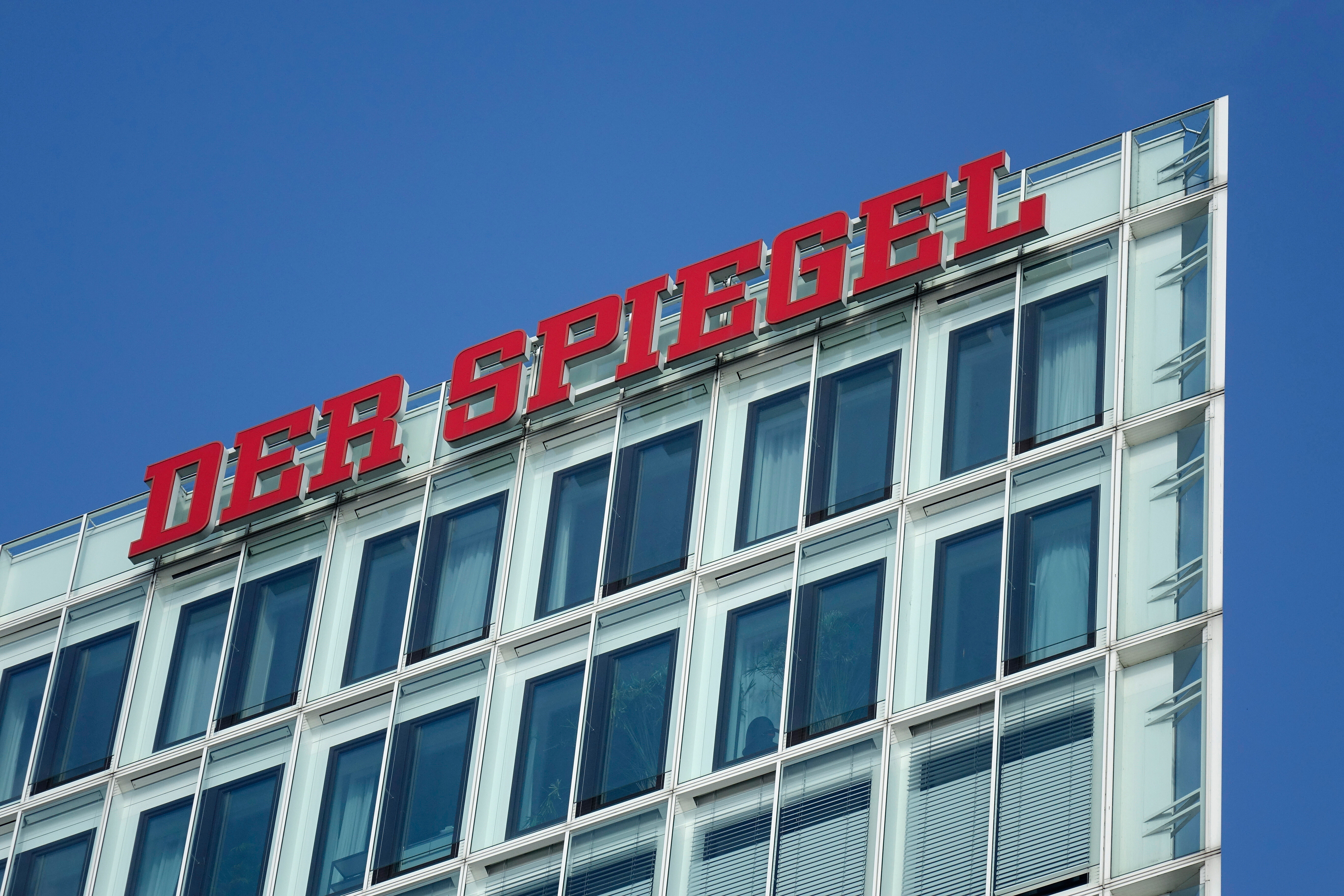
Editorial offices such as Der Spiegel are given special protection.
The federal government’s draft law interprets the EU regulation in an especially aggressive manner. Article 22 of the EU regulation states that national authorities have the power “to carry out inspections in all premises that providers of political advertising services use for the purposes of their commercial, business, craft, or professional activities, or to request a judicial authority to order such inspections, (…) in order to examine, secure, or obtain copies or extracts of information contained on any storage medium whatsoever.” The EU thus refers seizures to judicial authorities.
For Joachim Steinhöfel, the renewed efforts by the EU and the federal government are part of a fundamental shift: “In the past, it was the platforms that threatened freedom of expression by exercising censorship. Since the change of power in the United States last year, that has changed and interference with freedom of expression has become rare. The main enemies of this fundamental right are now the German and European legislators, who are restricting free speech in Europe—and even extraterritorially—through unconstitutional regulations.”
Digital Ministry: Draft bill based on “current law”
NIUS asked the responsible Digital Ministry how it assesses the constitutional concerns. The ministry responded by citing numerous legal provisions. It added that the provision on searches is “based on established law in economic regulation. For example, the Act against Restraints of Competition, the Telecommunications Act, the Digital Services Act, and the Federal Data Protection Act also allow authorities to conduct searches without judicial authorization.” This is factually correct; however, the current draft law on political advertising affects the highly sensitive area of freedom of expression—unlike, for example, competition law.
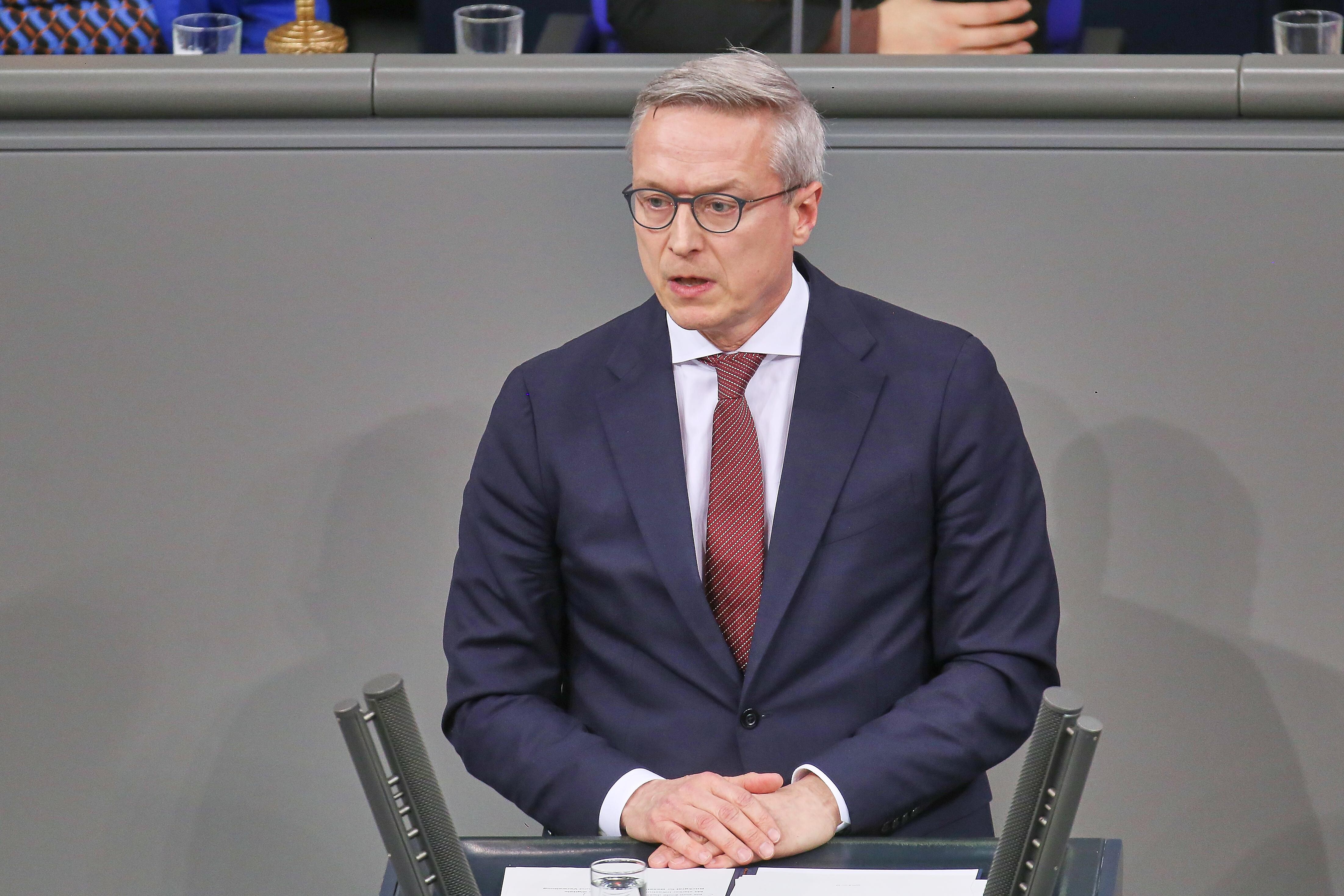
Karsten Wildberger is Minister for Digitalization and State Modernization. He previously worked as a manager for various large companies.
Alongside Minister Wildberger, the parliamentary state secretary Philipp Amthor, a prominent CDU figure, is responsible for the law. His role raises questions, given that as recently as 2021 Amthor emphasized the importance of political advertising in a Bundestag speech: “Political advertising is an essential component of political opinion-forming. It is directly linked to democratic legitimacy and is active participation in the political opinion-forming process.” At the time, Parliament was debating how citizens could be protected from unwanted material in their mailboxes.
Today, political advertising is primarily about the power of the internet—and new media that challenge the dominance of public broadcasters and so-called leading media in shaping public discourse. The EU has placed the fight against alleged disinformation at the top of its agenda, which in practice primarily targets dissenting opinions. Federal Chancellor Friedrich Merz has also repeatedly adopted the left-wing framing of “disinformation.” This helps explain why the government passed its draft law in the final cabinet meeting of the year, apparently betting that its draconian measures would go unnoticed. Amthor left a NIUS inquiry about his apparent change of heart unanswered.
The power of the head of the Federal Network Agency, Klaus Müller, also grows under the planned law. Kubicki views the role of the Green Party agency chief critically: “It is a major problem when individuals who were actively involved in politics become heads of authorities and thereby gain enormous powers that, in the case of Klaus Müller, directly affect free speech. There is a risk here of politicizing state action.”
Boehme-Neßler criticizes not only the draft law but also the very premise of the EU regulation: “The draft law reflects an authoritarian and undemocratic approach to controlling and regulating political debate by the state. In a democracy, manipulation and ‘fake news’ are exposed through the free discussion of courageous citizens—not through a state that monitors and intimidates.”
Explore more: HateAid – NIUS explains how the German Censorship Complex operates
Mehr NIUS:
Die skurrilsten Beschlüsse des Linken-Parteitags
Regierungs-Kommission fordert die AfD-Rente – die große NIUS-Analyse zu den 33 Empfehlungen
Bericht: Das will die AfD an deutschen Schulen und Universitäten verändern
Erst „faschistische Politik“ unterstellen, dann Reue bekunden: Linken-Chef bittet CDU um Entschuldigung
„Den Garaus machen“: Linke-Fanatiker ruft auf Parteitag zu Mord an Kapitalisten auf
33 Empfehlungen im Wortlaut: Das sind die wahren Pläne der Renten-Kommission
Neues Heizungsgesetz: Deutsche Umwelthilfe kündigt Klimaklage vor Bundesverfassungsgericht an
Neuer Linken-Chef Pantisano: Es gibt keinen Unterschied zwischen der CDU und den Faschisten
Mehr NIUS:
Erst „faschistische Politik“ unterstellen, dann Reue bekunden: Linken-Chef bittet CDU um Entschuldigung
„Den Garaus machen“: Linke-Fanatiker ruft auf Parteitag zu Mord an Kapitalisten auf
33 Empfehlungen im Wortlaut: Das sind die wahren Pläne der Renten-Kommission
Neues Heizungsgesetz: Deutsche Umwelthilfe kündigt Klimaklage vor Bundesverfassungsgericht an
Neuer Linken-Chef Pantisano: Es gibt keinen Unterschied zwischen der CDU und den Faschisten
Climate-Trouble: „Sie steckten mich in einen fensterlosen Raum“ – wie ein kritischer Professor aus seiner Universität gemobbt wurde
Kretschmer kritisiert AfD-Strategie: „Das bloße Ausgrenzen bringt nichts“
Aus Angst vor einer AfD-Regierung: Innenminister planen neue deutsche Sicherheitsarchitektur
Pauline Voss
Artikel teilen
Kommentare